Keep looking!

Strange, isn’t it: We have more, much more to do than before Corona. We realized all books planned, even 3 additional titles. Everything has changed, all that has been learned in 27 years of publishing is totally new each day.—Are we prepared to the New? And wasn’t it exactly the New, the curiosity about »News« that inspired the founding of a… MORE


Authors & Books
Jakob Sturm
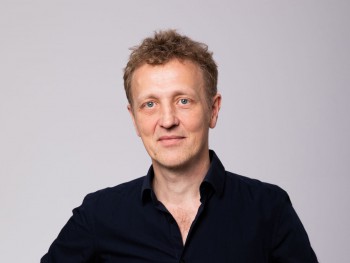
Jakob Sturm, born in Straubing in 1966, studied philosophy and sociology in Munich and Frankfurt am Main as well as experimental spatial concepts at the Hochschule für Gestaltung (HfG Art School) Offenbach. In addition to his artistic space-related work, he is co-initiator of projects for the creative development of urban, vacant spaces, such as the production and exhibition platform basis or Radar / Creative Spaces for Frankfurt.
Art was the reality principle, the family lived in the impossible. Life was suddenly something ideal.
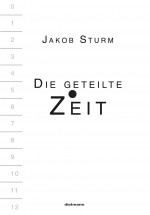
The Divided Time (Die geteilte Zeit)
- Hardcover
- 216 pages
978-3-86638-328-9

Jakob Sturm’s third book: It is about space, time, human relationships, places, things, and memory, about bulky waste, the infinite number of real stories of people, their overlaps, and the »shared time« in two senses—the shared time and the time fragmented by everyday and existential breaks…
Jakob Sturm sticks to what has preoccupied him in his two previous books, »Orte möglichen Wohnens / Meine Geschichte, mein Weg in die Kunst und von der Utopie« (Places of Possible Living / My Story, My Path to Art and Utopia) from 2020 and »Abschied vom Vater – Gegenwart / Ein persönlicher Essay über Kunst« (Farewell to Father – Present / A Personal Essay on Art) from 2022. But he makes one of his most interesting discoveries in such a way that his readers can follow along with him as they read:
The writing, the reflection on the writing of his family and artistic background, flows into it. And the result is a new story, in which the question of what unites and divides time runs parallel, and does not only concern the seemingly special points, such as the beginning or the end:
Where else could one begin to tell one’s own story, or why does one seek a specific beginning? To what extent is there this one beginning to one's own story in which one believes one can find oneself? If one does not assume a linear and consistent development from the outset, can one not begin anywhere?
Jakob Sturm has consistently pursued his path in storytelling and expanded it by adding a new dimension: he is on his way to literary storytelling. And from here, he will also create a different kind of art as an artist.
Contents:
Intro:
The story so far
The Clock
Farewell
Settling in
The Things
Photos
Places and spaces left behind
Appropriation of space
Appropriation of time
Responsibility
The other stories
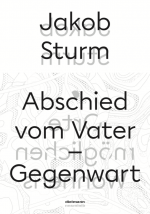
Farewell to the Father – Present
A Personal Essay on Arts
- 176 pages
- Softcover
- With selected pictures
- of his father’s art
978-3-86638-360-9
Just as Jakob Sturm had finished his book »Places of
Possible Residence«, in which he had reflected on the origins of his art from his earliest experiences and the life of his family, including his father as an artist, his father died.
»At the edges of the void, a sense of closeness remains« ...
In this second book, Jakob Sturm thus takes up the places of possible dwelling, continues, takes leave – by entering anew into his reflection, also about the over of his reflection.
I am sitting here again, early in the morning, just as I was when I feverishly typed the text, my self-memories, into the keyboard with an urgency that is already hard for me to comprehend. I look up from the screen and stare into the same space in my mind without consciously perceiving it.
There is still this feeling of emptiness in between. The feelings cannot be compared, but this sensation is no less intense than the mood that drove me when I was writing the book.
Once again it goes down a level, now also literary on an even further clarified and developing level, to the roots of art.
(The book was published with the kind support of the HKS Hessische Kultur Stiftung).
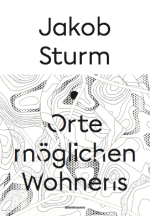
Places of Possible Residence
My story, my way into art, and from utopia
- 360 pages
- Hardcover with ribbon
- have a look at Yumpu
978-3-86638-272-5
I – who is this and what is this I? On what basis can I say »I«?
This is how radically I posed the question after my Parkinson's diagnosis in 2017, at the moment when this basis was taken away from me. A question that not only concerns me.
The town of Wies was the way out of childhood, the continued isolation at a new stage, a new, important stage in the development of my relationship to art, the dissolution of the family into a loose association and yet the continuing question of the location of this family, which now increasingly lived on in the ideational space, detached satellites, connected by questions that seemed less and less pragmatic in nature, but to stem from an art world. The pragmatic decisions lost their grounding in the longing for another world, whose ideal perspective seemed to have lost its foundation through social development. They, the decisions made for the sake of the family, increasingly seemed unworldly, especially from a later perspective and from the point of view of the environment, the constant reorientation, partly out of the most banal occasions, but they carried a great longing.
HERE you will find some more (German) excerpts from the volume. – Stay curious!
The book was published with the kind support of the Cultural Office of the City of Frankfurt am Main.